





The Technical Architecture of Yu-Gi-Oh! Master Duel: A Masterclass in High-Level Strategy
Yu-Gi-Oh! Master Duel is not merely a digital card game; it is a high-speed simulator of complex logical chains, resource management, and psychological warfare. Unlike its physical predecessors, Master Duel operates within a unique "Best of One" (Bo1) global ladder environment, which fundamentally alters how players must approach deck construction and tactical execution. To succeed at the highest levels—Master Tier and beyond—a duelist must move past the basic understanding of card effects and begin viewing the game through the lens of probability, chain link optimization, and the management of hidden information.
This deep dive explores the technical architecture of high-level play. We will examine how the game’s automated engine creates specific tells, how to navigate the most punishing Forbidden and Limited lists, and why the math of the draw is more important than any individual boss monster. Whether you are navigating the intricate combos of Snake-Eye or the oppressive control of Labrynth, the underlying principles of the Master Duel engine remain the same. This is an exploration of the game's soul, designed for those who wish to master the digital arena.
1. The Genesis of the Digital Meta: Navigating the Bo1 Forbidden List
The transition from physical TCG/OCG play to Master Duel is defined by the absence of a Side Deck. In a "Best of One" format, you do not have the luxury of losing Game 1 and then bringing in specific "silver bullets" like Anti-Spell Fragrance or Dimensional Barrier to shut down your opponent's specific strategy. This necessitates a philosophy of Main Deck Versatility, where every card must have utility against a broad spectrum of the meta. This is why Master Duel’s Forbidden and Limited list often hits consistency cards rather than just power cards, forcing players to find creative ways to bridge their combos.
Furthermore, the presence of Maxx "C" at three copies fundamentally warps the game’s time-space continuum. In Master Duel, every deck is essentially built around the Maxx "C" Mini-game, consisting of 3x Maxx "C", 3x Ash Blossom & Joyous Spring, 2x Called by the Grave, and 1x Crossout Designator. This 9-card core is the tax required to play the game competitively. Understanding this temporal shift—where a single card can dictate whether a turn lasts thirty seconds or ten minutes—is the first step in mastering the Master Duel ecosystem.
The Impact of Semi-Limited Status
Master Duel uses the Semi-Limited (2 copies) status more aggressively than other formats. This is designed to slightly decrease the mathematical probability of opening a starter without killing a deck entirely. When building, you must compensate for these hits by utilizing sub-optimal searchers or increasing your deck size to maintain a specific Hand Trap to Engine ratio.
2. Temporal Mechanics: Mastering the Toggle and Priority

In Master Duel, the game engine constantly checks for possible actions, creating prompts for both players. These prompts are a double-edged sword; they assist you in not missing a timing, but they also act as a digital tell. If the game pauses for three seconds every time you summon a monster, your opponent knows with 90% certainty that you are holding a Maxx "C" or a Nibiru, the Primal Being. High-level play involves manipulating the Toggle setting (Auto/ON/OFF) to hide these tells.
Setting your toggle to OFF during your opponent's early plays can lead them into a false sense of security, encouraging them to over-extend into a massive summon. Conversely, switching to ON allows you to activate cards during the Draw Phase or Standby Phase before your opponent can even enter their Main Phase. This is crucial for cards like Droll & Lock Bird or Artifact Lancea, which need to be live before the first search effect of the turn occurs. Mastering the toggle is the digital equivalent of a poker face.
Tactical Toggle Uses
- Draw Phase Toggle ON: Use to activate Maxx "C" to avoid Triple Tactics Talent.
- End Step Toggle ON: Use to activate Promethean Princess, Bestower of Flames in the GY before the turn officially passes.
- Toggle OFF: Hide the presence of Infinite Impermanence until the most impactful target hits the field.
3. The Architecture of the Chain: Resolving Complex Stacks
The Chain is the most rigorous logical structure in Yu-Gi-Oh!. In Master Duel, the automation handles the math, but the player must handle the sequencing. A common advanced technique is Chain Blocking. When multiple effects trigger simultaneously (e.g., when a Link Monster is summoned using materials that have GY effects), the player can choose the order in which they are placed on the chain. By placing the most important effect at Chain Link 1 (CL1) and a less important protection effect at Chain Link 2 (CL2), you prevent your opponent from using Ash Blossom or Baronne de Fleur to negate the CL1 effect.
Understanding Simultaneous Effects Go On Chain (SEGOC) is vital. In Master Duel, the game will ask you the order of your triggers. If you are playing a deck like Tearlaments or Branded, your ability to layer these effects determines whether your board-building is successful or interrupted. You must also be wary of Turn Player Priority, which dictates that the player whose turn it is gets the first opportunity to activate a Trigger Effect before the opponent can respond with a Fast Effect.
4. Resource Management: The Graveyard as the Second Hand
In the modern era of Master Duel, the Graveyard (GY) is rarely a discard pile; it is a reservoir of potential energy. Decks like Snake-Eye and Fire King treat the GY and the Spell/Trap zone as fluid extensions of the hand. Mastering these decks requires a shift in how you value card advantage. Going -1 (losing a card) in the short term to set up a GY recursion that yields a +3 next turn is the hallmark of a professional duelist. You must track not only what is in your hand, but every single card name in your GY that has a Once Per Turn (OPT) clause.
Managing Hard Once Per Turn (HOPT) versus Soft Once Per Turn effects is a critical distinction in the Master Duel interface. A Soft OPT (e.g., "Once per turn, you can...") can be reset if the card leaves the field and returns. High-level combo decks utilize Link-climbing to send these cards to the GY and then Special Summon them back to refresh their effects. If you aren't counting your activations, you will find yourself clicking the yellow buttons until you have no moves left, often leaving a sub-optimal board that is easily dismantled.
5. Mathematical Deck Construction: Ratios and Probabilities
Successful Master Duelists don't just pick 40 cards they like; they use hypergeometric distribution to calculate the odds of opening their starters. In a 40-card deck, running 3 copies of a card gives you a 33.7% chance of seeing it in your opening 5-card hand. If you have 9 starters (cards that begin your combo), your probability of a playable hand jumps to nearly 75%. This mathematical rigor is why you see the top players trimming win-more cards in favor of consistency pieces like Pot of Prosperity or Bonfire.
There is also the 60-Card Pile philosophy. With the card That Grass Looks Greener limited, 60-card decks are less common but still viable for archetypes that benefit from a bloated GY. The trade-off is a lower probability of drawing specific hand traps. When building for the Master Duel ladder, you must decide: Do I want a 40-card deck that does one thing perfectly every time, or a 50-60 card deck that has enough gas to play through three negates? For most, the Golden 40 remains the standard for climbing the ranked ladder effectively.
Calculating the Garnet Factor
A Garnet is a card that is necessary for your engine but useless (or detrimental) in your hand. High-level deck building involves Garnet Management. If your deck requires 3 Garnets to function, you must increase your deck size or add discard outlets to ensure those cards can be moved from the hand to the GY or Deck where they belong.
6. Breaking the Unbreakable: Board-Breaking vs. Mid-Range Grind
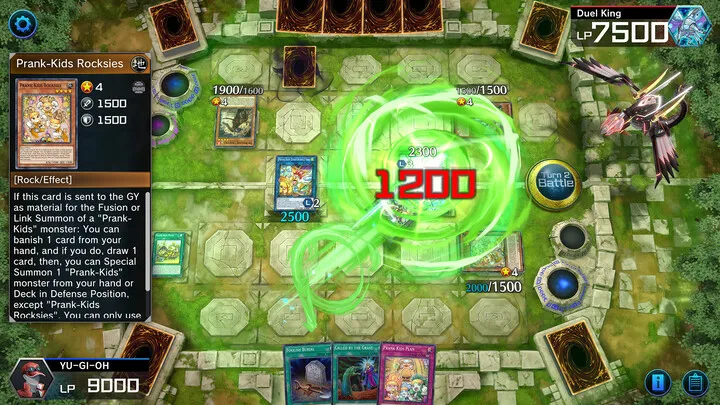
Master Duel’s Going Second problem is legendary. When an opponent sets up 4+ negates, the game feels over before your first draw. Mastering the Board Breaker suite is the only way to combat this. Cards like Evenly Matched, Forbidden Droplet, and Dark Ruler No More are designed to trade one card for several of the opponent's resources. However, using these cards requires precise timing. For instance, using Forbidden Droplet by sending a card that triggers in the GY is a plus play that many novice players overlook.
Conversely, Mid-range decks (like Vanquish Soul or Sky Striker) don't try to build an unbreakable board. Instead, they focus on trading resources efficiently. The goal here isn't to stop the opponent from playing entirely, but to ensure they spend more resources to build their board than you spend to break it. This war of attrition is the most complex form of Master Duel, as it requires deep knowledge of every other archetype's choke points.
Tier List of Board Breakers
- Super Polymerization: Unrespondable; uses opponent's monsters as material.
- Kaijus / Underworld Goddess: Tributes an opponent's monster, bypassing all protections.
- Lightning Storm: Mass backrow or monster destruction, but requires an empty field.
7. The Extra Deck: The Precision Toolbelt
The Extra Deck in Master Duel is where most of the game's actual power resides. It is limited to 15 cards, making every slot precious. In high-level play, the Extra Deck is divided into three categories: Starters (monsters needed to begin the combo), Extenders (monsters that bridge into higher Link or Synchro levels), and Finishers (monsters that seal the win). A master duelist will also dedicate 1-2 slots for specific silver bullets that counter the current most-played deck.
For example, many decks now include S:P Little Knight not just as a generic interruption, but as a way to banish key GY pieces during the opponent's turn. The mastery comes from knowing which monster to summon in response to the opponent's specific board. If they have a monster that cannot be destroyed by card effects, you must have a non-destruction removal option like Accesscode Talker or Divine Arsenal AA-ZEUS - Sky Thunder ready in your Extra Deck.
8. Economy and Crafting: The F2P Strategic Path
Because Master Duel is a digital platform, your ability to play the game is tied to your Gem and Crafting Point (CP) management. A common mistake for new players is to spend UR (Ultra Rare) CP on flashy boss monsters. High-level players do the opposite: they craft Staples first. A set of 3 Maxx "C" and 3 Ash Blossom will serve you in 100% of your decks, whereas a specific boss monster might only serve you in one.
Strategic crafting also involves knowing how to dismantle efficiently. When an archetype is hit by the Forbidden/Limited list, the game often offers a full CP refund for a limited time. Keeping track of these updates allows you to pivot between decks without spending real money. The F2P path is not about having every card; it’s about having every relevant card for the deck you are currently piloting to its maximum potential.
9. Reading the Interface: Using the Log and Timer
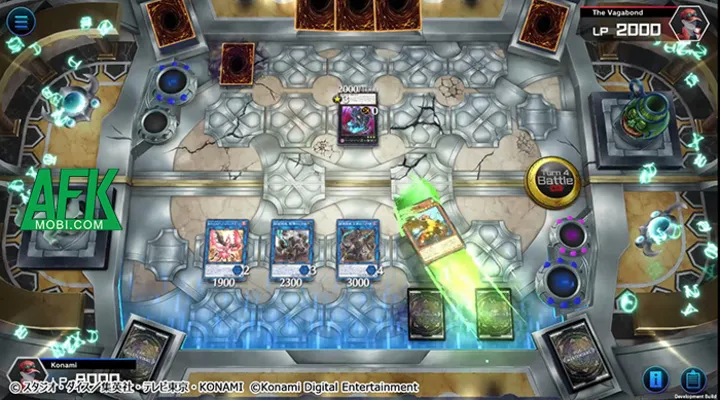
The Master Duel interface provides more information than the physical game if you know where to look. The Duel Log tracks every card activated, but it also tracks which cards were added to the hand. If an opponent searches a card, it remains "revealed" in their hand in the digital log. A master player constantly checks the log to see exactly what their opponent has searched and plans their negations accordingly.
Furthermore, the Timer is a resource. In Master Duel, you are given a limited amount of time to complete your moves. For complex combo decks, the clock is just as much of an opponent as the other player. High-level players practice their combos in Solo Mode until the muscle memory is fast enough to execute a full turn in under 60 seconds, leaving them plenty of time to think during the opponent’s turn.
10. The Psychological Endgame: Bluffing and Conceding
The final h2 of mastering this game is the mental game. Because it is an anonymous online ladder, you can use the game's automation to bluff. Setting a card like Called by the Grave in your backrow when you have no other interruptions can sometimes cause an opponent to play more cautiously, fearing it is a high-impact trap like Infinite Impermanence.
Knowing when to concede is also a technical skill. In the Master Duel ladder, time is your most valuable currency. If your opponent has established a board that you mathematically cannot break with the remaining cards in your deck, conceding immediately allows you to move on to the next game and preserve your mental energy. Climbing the ladder is a marathon, not a sprint, and preserving your focus for winnable games is the hallmark of a true Master.
Conclusion
Mastering Yu-Gi-Oh! Master Duel is a journey of constant learning. It is a game where a single misplay in the first thirty seconds can result in a loss ten minutes later. By understanding the chain system, managing your resources like a hawk, and building your deck with the precision of a mathematician, you can navigate the complexities of the digital arena. Whether you are a "Third Rate Duelist with a Fourth Rate Deck" or a burgeoning King of Games, the path to mastery is always open—one draw at a time.