The Master of Momentum: How Fortnite Transformed Movement into a Competitive Discipline
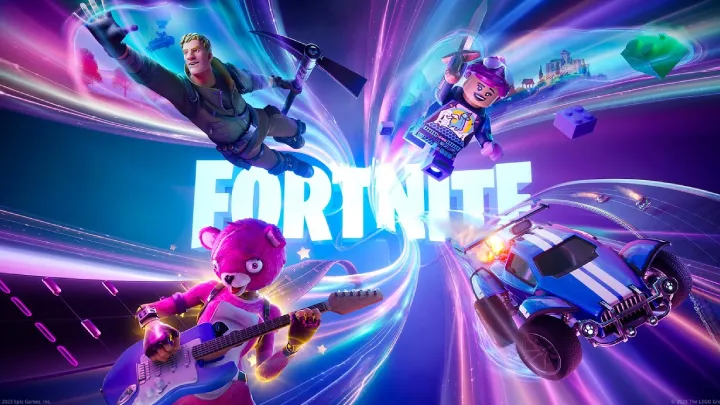
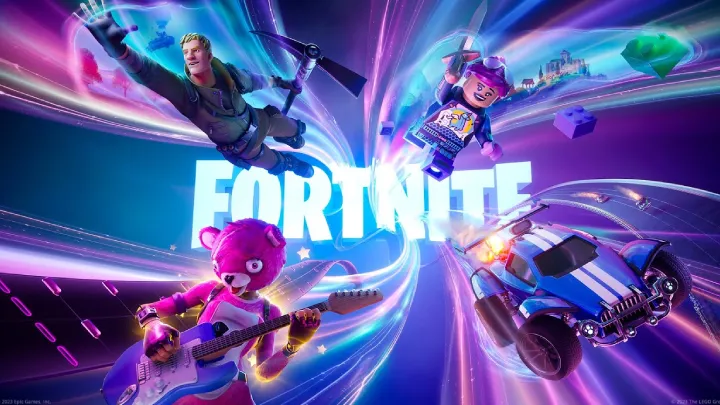
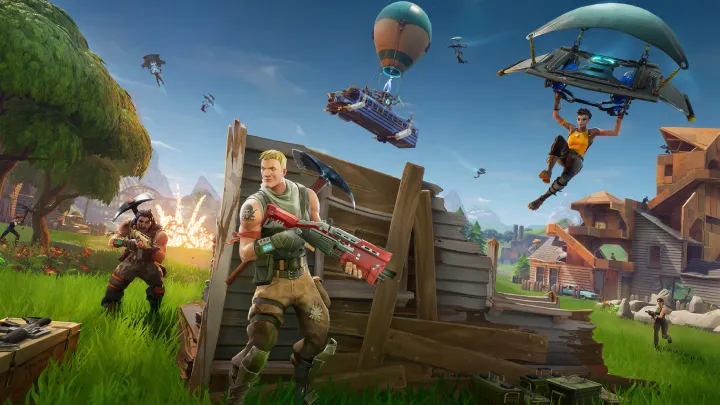
For years, video games treated movement as a utility—a means to transition a character from Point A to Point B. In competitive shooters, movement was historically secondary to accuracy; your crosshair placement, reaction time, and recoil control dictated your skill ceiling. Then came Fortnite. When Epic Games dropped its battle royale mode into the cultural zeitgeist, it fundamentally shattered the traditional geometry of the shooter genre by binding spatial movement to structural creation.
However, the game's greatest mechanical evolution wasn't just the ability to build walls; it was how players learned to move through them. Over the course of nearly a decade, the core physics of Fortnite shifted from a clunky, physics-bound sandbox into a hyper-fluid, frame-perfect discipline. This article analyzes the mechanical anatomy, technical architecture, and psychological evolution of Fortnite’s movement mechanics, detailing how a game originally designed around slow-paced tower defense became the world's fastest, most complex tactical athletic simulator.
1. The Dynamic Architecture of Building-As-Movement (2017–2018)
In the earliest iterations of Fortnite Battle Royale, building was envisioned as a defensive precaution. Epic Games designed the mechanic to allow players to construct makeshift forts, mimicking the survival loop of the game’s original Save the World PvE mode. The initial player base treated the grid system with a deliberate, architectural mindset: you took fire, you built a 1x1 box or a simple ramp, and you peeked over the edge. Movement and building were separate inputs executed in a sequential loop.
This paradigm collapsed as competitive players discovered that building could be used offensively to manipulate vertical space dynamically. Instead of building a fort to hide in, aggressive players began utilizing single ramps to rapidly gain high ground during active engagements. This birthed the concept of "ramp rushing"—using structural assets not as cover, but as physical terrain extensions that allowed players to sprint upward into enemy territory without losing horizontal momentum.
Standard Grid Movement vs. Dynamic Pathing
[Traditional Shooter] Horizontal Plain: A ---------> B (Bounded by Map Geometry)
[Fortnite Open Grid] Vertical Extension: A ----(Ramp)----> B (Dynamic Cover + Altitude)
The realization that building was an accelerant for player pathing fundamentally recontextualized Fortnite’s physics engine. The grid system ceased to be a static environmental feature and became an active variable in a player’s kinetic equation. By placing structures directly ahead of their character models, players could cross chasms, scale vertical cliffs, and bypass traditional map bottlenecks, rendering traditional map-control strategies completely obsolete within the first twelve months of the game's lifecycle.
The Dawn of Mechanical Synchronization
As the skill ceiling crept upward, the separation between moving and building dissolved entirely. Players realized that by precisely timing their jumps with the placement of horizontal floors and vertical ramps, they could climb multiple stories in seconds without ever breaking their forward sprint. This required a highly localized form of hand-eye coordination that had never existed in modern shooters: syncing mouse/stick look-angles with WASD or analog stick inputs while rapidly toggling structural blueprints.
The Geometry of the "90-Degree Turn"
The apex of this early era was the invention of the "90," a mechanical sequence where a player builds two walls, a floor, and a ramp while spinning 90 degrees, trapping their character model at the very top of the newly placed ramp to force a vertical boost.
- The Wall Buffer: Two intersecting walls protect the player's blind spots during the turn.
- The Floor Catch: A horizontal floor is placed beneath the character model mid-jump, preventing them from falling through their own structure.
- The Ramp Launch: A ramp is placed instantly after the floor, utilizing the game’s collision physics to shove the player's model upward.
2. The Turbo Build Revolution and Spatial Compression (Late 2018)
In early 2018, Epic Games introduced an update that altered the competitive landscape permanently: Turbo Building. Originally, players had to click their input device for every single structure they wished to place. Turbo Building allowed players to simply hold down their primary fire button, automatically placing structures at a set interval as their crosshair swept across the grid. This interval was eventually tuned down to a blistering 0.05 seconds per structure.
This mechanical shift compressed the physical space of Fortnite encounters. Because structures could be conjured nearly instantaneously, the physical gap between two opposing players could be closed or entirely walled off in milliseconds. Movement became hyper-dense. Players were no longer navigating through open fields; they were navigating through tight, self-constructed labyrinths where a single misstep meant colliding with an enemy wall instead of their own.
Structural Density Evolution
Manual Era: [Player] ---- (Empty Space) ---- [Player]
Turbo Era: [Player][Wall][Floor][Cone][Wall][Player] (Zero Latency Boundary)
The introduction of Turbo Building also birthed the "Box Fighting" meta. When two high-level players engaged, the fight immediately condensed into a grid space measuring just one or two building tiles wide. Movement within this micro-meta was no longer about covering distance; it was about managing character positioning within a 3D cube to maximize right-hand camera peeks while avoiding enemy piece control.
The Physics of Structural Phase-Throughs
Turbo Building introduced a massive technical challenge: what happens when a player model is standing directly inside the grid space where a structure is built? To prevent players from getting stuck or launched into orbit by conflicting collision boxes, Epic implemented a phase-through mechanic. If any part of a player's hitbox overlaps with a structure at the moment of creation, that structure remains translucent and non-collidable until the player moves entirely out of its frame.
Exploiting the Phase Variable
Savvy competitive players quickly weaponized this engine limitation to completely bypass defensive walls.
- The Phase Ramp Setup: A attacking player places a wooden ramp directly behind their back while facing an enemy's defensive wall.
- The Kinetic Wedge: By timing their forward movement so they are partially phased inside their own ramp, the ramp's collision engine applies a continuous forward pressure to the player's model.
- The Wall Breach: As the attacker exploits this internal pressure while pickaxing the enemy's wall, their character model is forced straight through the newly built enemy replacement wall the exact frame it is placed, completely ignoring the server's collision boundaries.
3. Edit-Pathing and the Metamorphosis of Fluid Navigation (2019)
Once the player base mastered the art of placing structures rapidly, the competitive bottleneck shifted from construction to deconstruction. Every structure placed by a player can be edited dynamically into various sub-shapes—walls can gain windows or doors, floors can be cut in half, and cones can be converted into ramps. In 2019, players began utilizing these edits not just to shoot through, but to navigate through their own builds without losing speed.
This gave rise to "edit-pathing," a discipline where a player sprints in a straight line through a sequence of their own solid walls and floors, editing openings into them a fraction of a second before impact. The physical sensation changed from building static obstacles to painting a fluid, shifting highway directly underneath one's feet. The skill gap widened exponentially; players who lacked the mechanical speed to edit-path were permanently out-positioned by enemies who could glide through solid matter.
Edit-Pathing Velocity Curve
[Traditional Navigation]: Sprint -> Stop -> Pickaxe Wall -> Step Forward (Low Velocity)
[Advanced Edit-Pathing]: Sprint -> Confirm Edit -> Phase Through Frame -> Continual Sprint (Max Velocity)
To maintain maximum velocity during an edit-path, players had to develop precise crosshair discipline. Because editing requires selecting specific tiles on a 3x3 or 2x2 grid that appears over the structure, swinging the crosshair too wide during an edit selection would ruin a player’s camera alignment, making it impossible to accurately aim at an enemy or place the next structure. The world’s best players developed micro-motions, selecting the absolute minimum edge of an edit tile to keep their crosshairs centered.
The Mechanical Breakdown of Triple Edits
By late 2019, the absolute gold standard for high-tier movement was the "triple edit." This sequence required a player to scale a vertical plane while simultaneously clearing three distinct structural blockades without breaking their maximum sprint velocity.
Triple Edit Execution Order:
[Player Sprinting Upward] -> (1) Edit Floor Tile -> (2) Edit Cone Tile -> (3) Edit Wall Tile -> [Clear Space]
Each of these actions had to be completed within a window of roughly 150 milliseconds. If the player selected the wrong tile, or failed to confirm the edit in time, their character model would strike the solid structure, instantly killing their momentum and leaving them completely vulnerable to enemy counter-attacks.
4. The Grid Physics Crisis and Collision Optimization (2020)
As millions of players simultaneously optimized their input speeds, Fortnite’s underlying physics engine began to buckle under the strain of high-frequency positional updates. In competitive tournaments, up to eighty players would routinely survive into the final, tiny storm zones. When these eighty players all began turbo-building, editing, and jumping within a hyper-compressed space, the server tick rate would drop from a stable 30Hz down to single digits.
This created severe desynchronization between player clients and the game servers. On a player's screen, they might have successfully cleared an edited floor, but the server—processing a massive backlog of structural modifications—would register the player as still below the floor, snapping them backward in a disorienting phenomenon known as "rubber-banding." Movement became inconsistent, dictated more by network latency and server stability than raw mechanical skill.
Server Inversion during High-Density Endgames
Client View: Player moves forward -> Jumps -> Clears Floor (Fluid)
Server Reality: Processing 500 builds/sec -> Misses Jump Frame -> Snaps Player Back (Rubber-Band)
In response, Epic Games spent much of 2020 rewriting how the game handled player physics and structural collision. They optimized the netcode to prioritize movement packets over structural visual updates and tightened the client-side prediction algorithms. This ensured that even if the server was lagging under immense structural load, the player's immediate movement felt responsive and predictive, preserving the tactical integrity of high-level competitive endgames.
The Double Movement Input Phenomenon
During this era of collision refinement, a massive disparity emerged between input devices. Controller players possessed 360-degree analog movement, allowing them to run sideways at a sharp angle while keeping their crosshairs pointed forward. Keyboard and mouse (KBM) players, bound by the digital nature of WASD keys, could only move at rigid 45-degree angles, severely limiting their spatial awareness and defensive building capabilities while sprinting.
The KBM Software Workaround
To bridge this competitive deficit, KBM players began utilizing third-party remapping software (such as Wooting double movement or Keys2XInput). These programs fooled the PC into recognizing digital WASD inputs as a virtual controller analog stick.
- The Result: KBM players unlocked custom diagonal angles (typically around 60–76 degrees).
- The Tactical Benefit: Players could now sprint completely sideways, placing protective walls to their flanks while maintaining maximum forward velocity down the competitive moving zones. Epic Games eventually recognized this mechanical necessity and integrated native custom movement angles directly into the game's settings menu.
5. Piece Control: Dictating Enemy Movement Paths (2021)
By 2021, competitive Fortnite had evolved past the point of simply using movement for self-navigation. The top echelon of players mastered "piece control"—the practice of aggressively placing your own structures in open grid spaces surrounding an enemy player before they can place their own. In essence, movement became an offensive weapon used to constrict, trap, and dictate the physical options of your opponent.
When a player established complete piece control over an opponent's grid box, they effectively stripped that opponent of their ability to move. An enemy trapped in a box where the walls, floor, and ceiling belong to you has no escape vector. They are locked into a static space, while you retain the fluid mobility to edit open a window, deliver a shotgun blast, and reset the wall for instant cover. Movement shifted from a defensive escape loop into a high-stakes game of spatial capture.
Piece Control Capture Matrix
[Open Grid Space] -> Enemy attempts to escape Right
[Attacker Movement] -> Instantly places Wall + Cone in that exact right tile
[Result] -> Enemy movement vector instantly halted; trapped in Attacker's matrix
To execute piece control effectively, a player must accurately predict their opponent’s movement trajectory a split second in advance. If an enemy takes damage, their natural instinct is to back up or escape laterally. A master of piece control identifies this micro-movement, rapidly moves their camera to pre-place structures in those exact exit tiles, and seals the trap before the enemy’s character model even arrives at the boundary.
Anatomy of a High-Ground Retake via Piece Control
The most complex expression of this meta was using piece control dynamically while scaling vertical space. Instead of simply building 90s to out-climb an opponent, players would deliberately track the enemy's vertical pathing through their builds, extending cones and walls through structural gaps to block the enemy mid-air.
Piece Control Retake Sequence:
[Side Jump around Enemy Build] -> [Extend Crosshair past Enemy Ramp] -> [Place Cone over Enemy Head] -> [Block Vector]
This sequence completely halts the enemy's upward momentum. While the enemy is stalled by the unexpected barrier, the attacker finishes their side jump, lands on a newly placed floor, and takes clean high ground, flipping the script of the encounter entirely through spatial dominance.
6. The Tactical Shift of the Zero Build Era and Natural Geometry (2022)
In March 2022, Epic Games executed arguably the balliest maneuver in modern live-service history: they introduced a permanent "Zero Build" mode, completely stripping away the game’s defining building mechanic. For years, the community believed that without building, Fortnite’s flat terrain and open fields would make it unplayable. To balance this structural vacuum, Epic fundamentally overhauled the core locomotion system of the game’s characters.
They introduced tactical sprinting, a parkour mantle system, and an evasive slide mechanic. Suddenly, movement was no longer about manipulating a digital grid system; it was about interacting with the map's natural topography. Players had to learn to read ridges, boulders, structures, and cliffs as sources of momentum and dynamic cover. The mechanical focus shifted from high-speed button inputs to momentum preservation and momentum translation.
Locomotion Ecosystem Transition
Build Era: Grid Navigation -> Spatial Creation -> Macro Apex Peeks
Zero Build Era: Chaining Slides -> Mantling Ledges -> Terrain Momentum Exploitation
Zero Build forced a complete re-education of the player base regarding line-of-sight physics. Without a pocket-wall to bail them out of bad positioning, players had to use the new slide mechanic to minimize their hitboxes while crossing dangerous sightlines. Chaining a tactical sprint into a down-slope slide allowed players to hit speeds that made tracking them with hitscan weapons exceptionally difficult, injecting a chaotic, kinetic energy into traditional gunfights.
The Physics of Slide Canceling and Momentum Carrying
The introduction of the slide mechanic introduced a wealth of physics-engine quirks that players quickly optimized. When a player initiates a slide down a hill, the game engine applies an environmental velocity multiplier based on the grade of the slope. If a player completes the full slide animation, they experience a brief recovery slowdown at the tail end.
The Momentum Chain Loop
To bypass this recovery penalty, competitive players developed "slide canceling."
- The Trigger: Initiate a tactical sprint to build maximum base momentum.
- The Drop: Trigger the slide button down an incline, instantly converting horizontal speed into a low-profile acceleration phase.
- The Cancel: Tap the jump or crouch key precisely mid-slide. This instantly truncates the sliding animation, preserving the accumulated slope velocity and launching the player forward into a high-speed leap or a seamless sprint reset.
7. Physics Exploits and the Physics-Driven Utility Meta (2022–2023)
As the updated movement mechanics settled into the core engine, Fortnite transitioned into an era heavily dictated by physics-driven utility items and environmental hazards. Epic Games began introducing items specifically designed to launch, bounce, or pull players across vast distances of the map. Items like the Shockwave Grenade, the Grapple Glove, and the Kinetic Blade ceased to be simple traversal tools—they became integral components of tactical combat pacing.
The implementation of these items forced players to master the engine's internal vector mathematics. For example, a Shockwave Grenade doesn't simply launch a player away from its blast radius; it applies an explosive impulse force to the player's current hitbox vector. If a player throws a Shockwave Grenade directly under their feet while stationary, they launch vertically. If they throw it slightly behind themselves while already executing a tactical sprint and a slide cancel, the vectors combine to launch them horizontally across hundreds of meters.
Vector Addition in Real-Time Engine Physics
[Base Sprint Vector: +5 m/s X] + [Shockwave Impulse Vector: +25 m/s X/Y] = [Combined Launch Phase: 30 m/s Diagonal]
This utility meta drastically altered the stakes of high-ground control. In previous eras, dropping from high ground was a death sentence due to fall damage. With the integration of impulse utility, high-ground players could deliberately drop into an enemy's box, deliver a killing blow, and immediately deploy a kinetic tool to rocket back up to safety before the structure could collapse.
Breaking Sound Barriers with Kinetic Interaction Chains
The absolute peak of this mechanical era was the discovery of multi-item momentum stacking. Players found that the engine did not place a hard cap on cumulative kinetic forces if the inputs were executed within specific animation frames.
Momentum Stacking Progression:
[Launch Pad Deployment] -> [Mid-Air Shockwave Grenade Interception] -> [Kinetic Blade Dash Engagement]
By perfectly sequencing these three mobility assets, a player could cross an entire quadrant of the island map in less than five seconds. This completely broken method of map traversal allowed teams to play deep inside the damaging storm circle to gather high-tier loot, completely secure in the knowledge that they could instantly outrun the storm phase using stacked physics vectors.
8. Unreal Engine 5, Chaos Physics, and Network Prediction Tick Rates (2024)
In 2024, Fortnite completely transitioned its backend architecture to fully leverage Unreal Engine 5’s cutting-edge capabilities, specifically its native Chaos Physics system. For the average player, this manifested as gorgeous environmental destruction and fluid foliage movement. For the competitive community, however, it completely altered the feel of player collision, structural weight, and frame-to-frame movement registration.
The Chaos Physics system replaced the old, rigid Legacy physics system with a highly precise, deterministic simulation solver. Under the legacy engine, player-to-player collision was notorious for feeling slippery or unpredictable during high-speed build fights; you could occasionally phase through a player's body or get pushed weirdly off a ramp edge. UE5 introduced hyper-accurate capsule collisions for character models, meaning that physical spacing between characters became incredibly precise down to the millimeter.
Physics Engine Structural Differences
[Legacy Engine Solver]: Approximate Hitboxes -> Loose Structural Overlaps -> High Phase Forgiveness
[Chaos Physics Solver]: Deterministic Tracking -> Pinpoint Capsule Collisions -> Strict Structural Boundaries
This engine upgrade coincided with an upgrade to Epic’s network prediction code. The server tick rates were optimized to process positional updates with much greater fidelity. This meant that high-speed movement techniques, like the triple edit or the slide-cancel ramp launch, felt identical whether you were playing in a low-population creative sandbox map or a highly populated, chaotic tournament environment.
The Mechanical Impact of Kinematic Rigidity
While the Chaos engine brought unprecedented consistency to the game, it also eliminated several legacy mechanics that players had relied on for years. The strictness of the new capsule collision shapes meant that certain micro-phasing exploits became physically impossible. Player models could no longer squeeze through microscopic gaps between intersecting walls and ramps, forcing players to adapt to a much cleaner, more deliberate style of pathing.
The Rise of Visual-Spatial Prediction
With the physics engine operating deterministically, top-tier movement became an exercise in visual-spatial forecasting. Because the engine was no longer dropping frames or desyncing positional data during rapid turns:
- Players could predict exactly where an opponent's character capsule would land after a jump.
- This predictability led to the optimization of "pre-aiming"—placing a crosshair at the exact pixel coordinate where an enemy's head would appear based on their current momentum vector, making movement errors instantly fatal.
9. The Modern Meta: Mastering Omnidirectional Kinetic Fluidity (2025)
By 2025, the dividing lines between the Building Meta and the No-Build Locomotion Meta had entirely dissolved, bleeding into a singular, highly complex movement discipline utilized across all game modes. Modern Fortnite movement is characterized by omnidirectional kinetic fluidity—the capability to seamlessly transition between building, mantling, sliding, and weapon swapping without ever experiencing a single frame of dead or un-cancelable animation.
The modern elite player operates with an incredibly dense input loop. In an active engagement, a player might execute a tactical sprint, slide around a corner, cancel the slide into a side-jump, place a protective wall mid-air, mantle onto the top edge of that wall, edit the wall into a half-arch to drop down onto an unsuspecting opponent, and swap to their shotgun—all within a two-second window. The character model has become an incredibly responsive extension of the player's intent, unbound by traditional genre restrictions.
The Contemporary Input Cycle (2-Second Window)
Sprint -> Slide -> Slide Cancel -> Side Jump -> Mid-Air Wall Place -> Ledge Mantle -> Confirm Edit -> Strike Phase
This level of movement mastery requires deep muscle memory and an understanding of "animation slicing." Every locomotion action in Fortnite has an initiation phase, an active phase, and a recovery phase. To achieve true fluidity, players learn the exact frame where the active phase ends, using a separate action input to cancel the recovery phase entirely. This effectively slices out the dead frames of an animation, maintaining peak velocity continuously.
The Mechanical Profile of an Elite Modern Mover
To understand the sheer technical scope of modern movement, we can break down the performance metrics and input distributions of a professional Fortnite player during a standard engagement.
Metric / ActionInput Target WindowKinetic PurposeAnimation Cancellation Rate12–16 framesEliminates recovery lag between disparate movement mechanics.Crosshair Displacement Max< 15 degrees of arcMinimizes mouse travel during edits to keep aiming vectors stable.Tactical Sprint PulsingEvery 2.5 secondsManages the stamina bar to ensure escape mobility is never depleted.Mantle-to-Weapon Swap< 80 millisecondsEnsures the weapon is firing the exact frame the ledge climb completes.
10. The Ultimate Horizon: Human Limitations and Neurological Reflexes
As Fortnite's movement systems reach structural and engine optimization maturity, the absolute final frontier of the game's evolution is no longer technical—it is biological. The inputs required to navigate Fortnite at the absolute highest tier exceed the physical demands of nearly any other competitive esport in existence. A professional player routinely sustains an Actions Per Minute (APM) count of well over 400, with bursts reaching up to 600 APM during intense, close-quarters build fights.
This astronomical input density pushes human neurological reflexes to their physical limits. The human brain requires roughly 150 to 200 milliseconds to process a visual stimulus and initiate a physical muscular response. In modern Fortnite, where a wall can be edited, shot through, and reset in under 100 milliseconds, players can no longer rely on purely reactive gameplay. High-level movement has transitioned into a game of pure predictive neurological patterning.
The Neurological Bottleneck
Visual Stimulus -> Retina Transfer -> Cortex Processing -> Motor Node Fire -> Muscular Input
[Total Average Human Time: 150ms] vs. [Elite Fortnite Edit Phase: 90ms] (Requires Predictive Firing)
The elite player's brain develops highly specialized motor schemas. When they see an enemy position, they don't consciously think about pressing the wall key, then the edit key, then dragging the mouse, then pressing sprint. The entire complex string of twenty distinct physical inputs is stored as a single, sub-conscious cognitive macro. The conscious mind simply selects the desired spatial outcome, and the nervous system executes the physical choreography automatically.
The Long-Term Ergonomic Cost of Kinetic Mastery
This extreme mechanical intensity has introduced a serious conversation regarding player health and career longevity within the esports ecosystem. The repetitive, hyper-fast snapping motions required by Fortnite’s movement mechanics put incredible strain on the tendons and nerves of the hands, wrists, and forearms, leading to a high rate of repetitive strain injuries (RSI) among young competitors.
The Evolution of Ergonomic Input Layouts
To combat physical degradation while maintaining competitive viability, the community has completely revolutionized traditional control schemes.
- The Death of Default Layouts: Almost no professional player uses the original default keybinds.
- The Optimization Matrix: Keybinds are mapped using meticulous ergonomic principles designed to distribute the physical workload evenly across all five fingers of the left hand, completely avoiding the over-use of a single index or pinky finger.
- The Controller Migration: Controller players utilize advanced configurations with back paddles or claw grips to ensure they never have to lift their thumbs off the analog sticks, ensuring that camera control and kinetic movement are never compromised for a single frame.
Conclusion
Fortnite’s movement system is a magnificent, accidental masterpiece of modern game design. What began as a slow, methodical tower-defense building feature evolved through player ingenuity and aggressive engine optimization into the most fluid, hyper-dynamic, and mechanically demanding locomotion system in the history of interactive media. By merging structural creation with physics-driven character mechanics, Epic Games created a digital space where movement is no longer just a way to traverse an environment—it is an art form, a tactical chess match, and a brutal test of human neurological limits. As the game continues to evolve on Unreal Engine 5, one truth remains absolute: in the colorful world of Fortnite, the player who controls the momentum controls the universe.